Business Card Printing.
Your business card needs to carry the right information and feel right in the hand. Send the finished size, number of names, quantity per person and whether you need one or two printed sides. Tell us if the card will be written on or used for appointments or loyalty stamps. Ask the shop to confirm stock and finish combinations before artwork is finalized.
Request a quote. The shop will confirm options and timing.
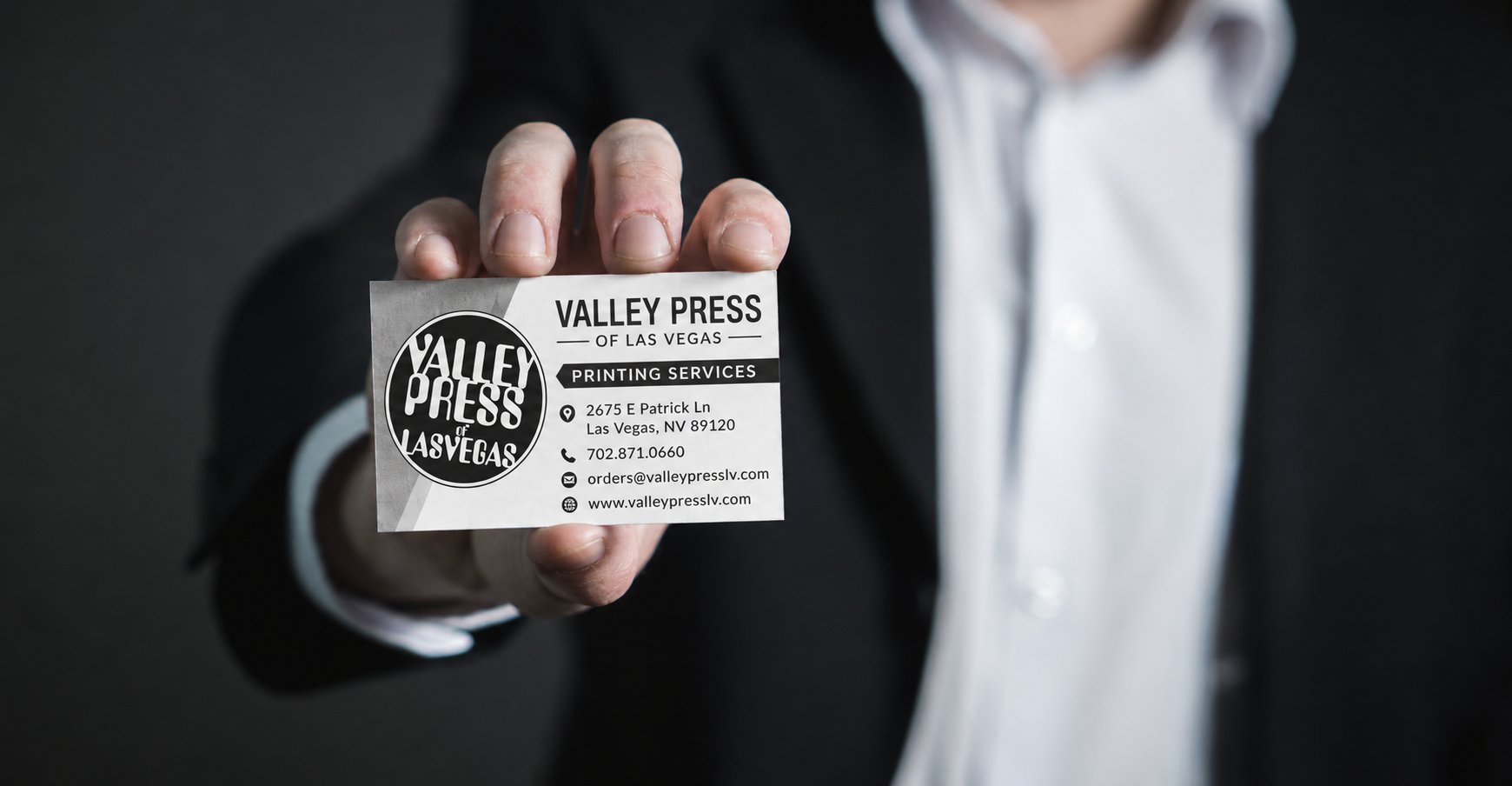
Products and options to discuss.
Use these examples to describe your job. Material, finish and format availability are confirmed in your quote.

What to include in your quote request.
| Property ↕ | Detail ↕ |
|---|---|
| Size and sides | Supply finished dimensions and one- or two-sided artwork |
| Names and quantities | List the quantity for each person or version |
| Stock preference | Describe weight, texture and whether the card must accept pen ink |
| Finish preference | Ask about matte, gloss or specialty effects and compatible stocks |
| Artwork | Include print-ready files, bleed and approved contact details |
Industries & use cases.
What to know about business card printing.
These planning notes explain common print choices. Confirm the materials, dimensions and finishing available for your job with the shop.
Choosing a stock and weight
Most cards printed in Las Vegas land on 14pt or 16pt coated cover. 14pt is the everyday standard and takes gloss, matte and spot finishes cleanly. 16pt is noticeably stiffer in the hand and is the usual pick when the card is doing sales work rather than sitting in a drawer.
Uncoated options behave differently. Linen has a woven texture that reads as traditional. 100% cotton is soft, thick and takes an impression well, which is why it pairs with letterpress and foil. If anyone will write on the card, test the intended pen on the finished stock; coatings and inks affect writability.
Finishes, and which ones survive a wallet
Gloss laminate resists fingerprints and scuffing. Spot gloss adds shine to selected artwork, often against a matte surface. Suitable coatings and substrates depend on the process; matte lamination is one possible combination.
Soft-touch is a matte laminate with a velvet hand. It shows oil from fingers more than gloss does, and it is worth handling a sample before committing a long run to it. Foil stamping and blind debossing both press into the sheet, so they want an uncoated or cotton stock with enough caliper to hold the impression.
Files that print the way you designed them
Send a press-ready PDF at 300 dpi in CMYK with 1/8" of bleed on every edge and every critical element pulled 1/8" inside the trim. Cutting is mechanical and moves slightly across a stack, so a border that sits exactly on the trim line will look uneven on some cards and fine on others.
Rich blacks need building deliberately rather than as 100% K, and any small reversed type wants to sit on a single ink rather than a four-colour build so it stays sharp. Our artwork and file guidelines cover formats, resolution and colour in more detail, and you can discuss file checking and proofing with the shop.
Ordering cards alongside the rest of your stationery
Cards are usually the first item of a set rather than the whole of it. If you are also printing letterhead, envelopes, labels or presentation folders, it is worth quoting them together so the stock and ink build match across the set: see business essentials for the rest of that list.
If the cards are for a trade show or a convention booth, tell us the show date when you send the specs. Booth graphics, badges and handouts are quoted through convention printing, and it is simpler to run the whole package on one job number.
Examples and print options
Illustrative images include product photography and mockups. They show print ideas, not a dated portfolio of completed client jobs.
“Thank you Valley Press for the outstanding customer service!
Often ordered alongside.
Three fields. One screen. Send your request.
The shop will review the specifications and deadline during business hours, then confirm options and timing.